
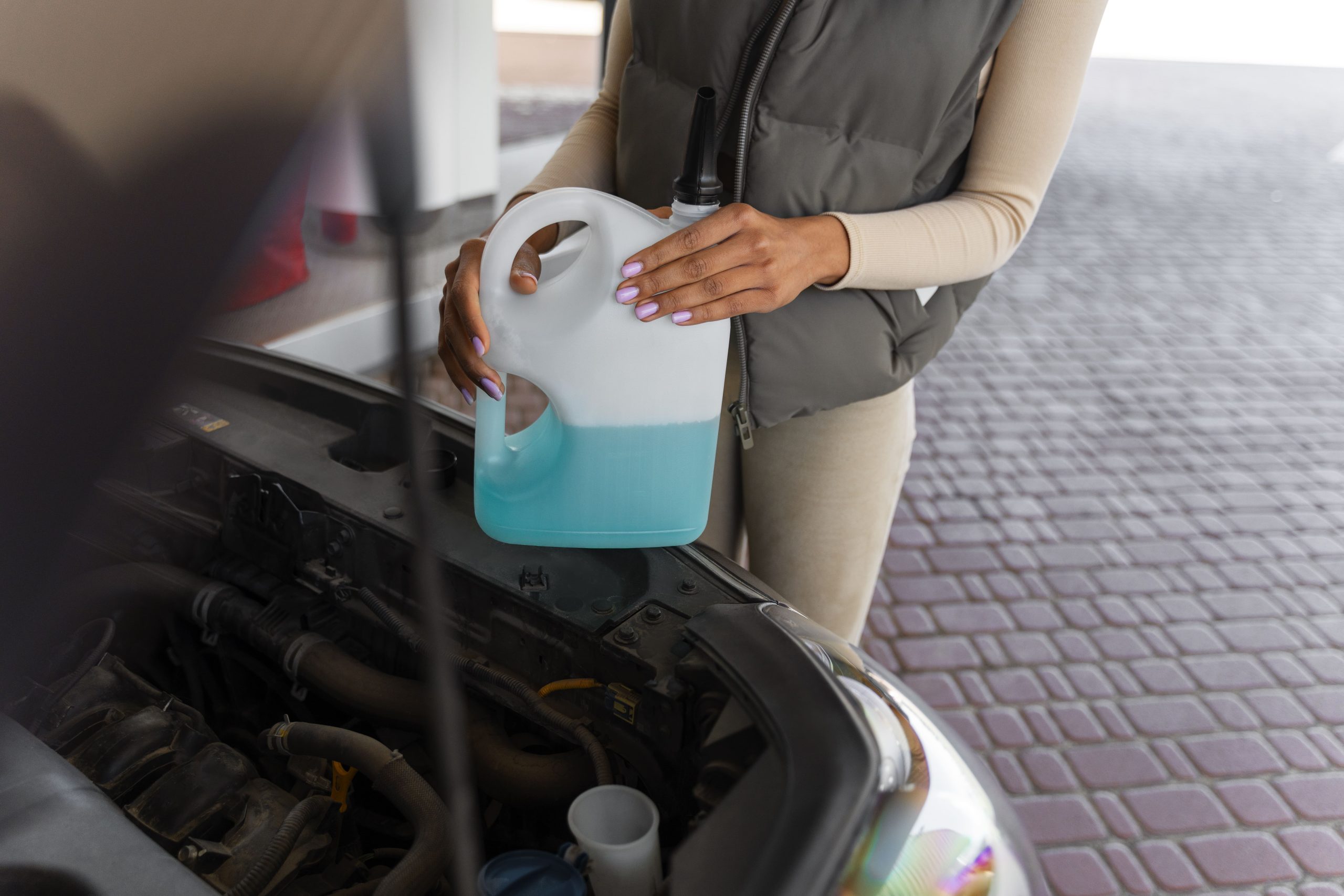
Aqueous urea solution, commonly known in the automotive industry as AdBlue, plays a crucial role in modern diesel engines. With stricter emission standards worldwide, including Malaysia, the need for effective emission-reducing solutions has never been higher. In this guide, we provide comprehensive insights into aqueous urea solution, its applications, benefits, and its relationship with AdBlue.
What is Aqueous Urea Solution?
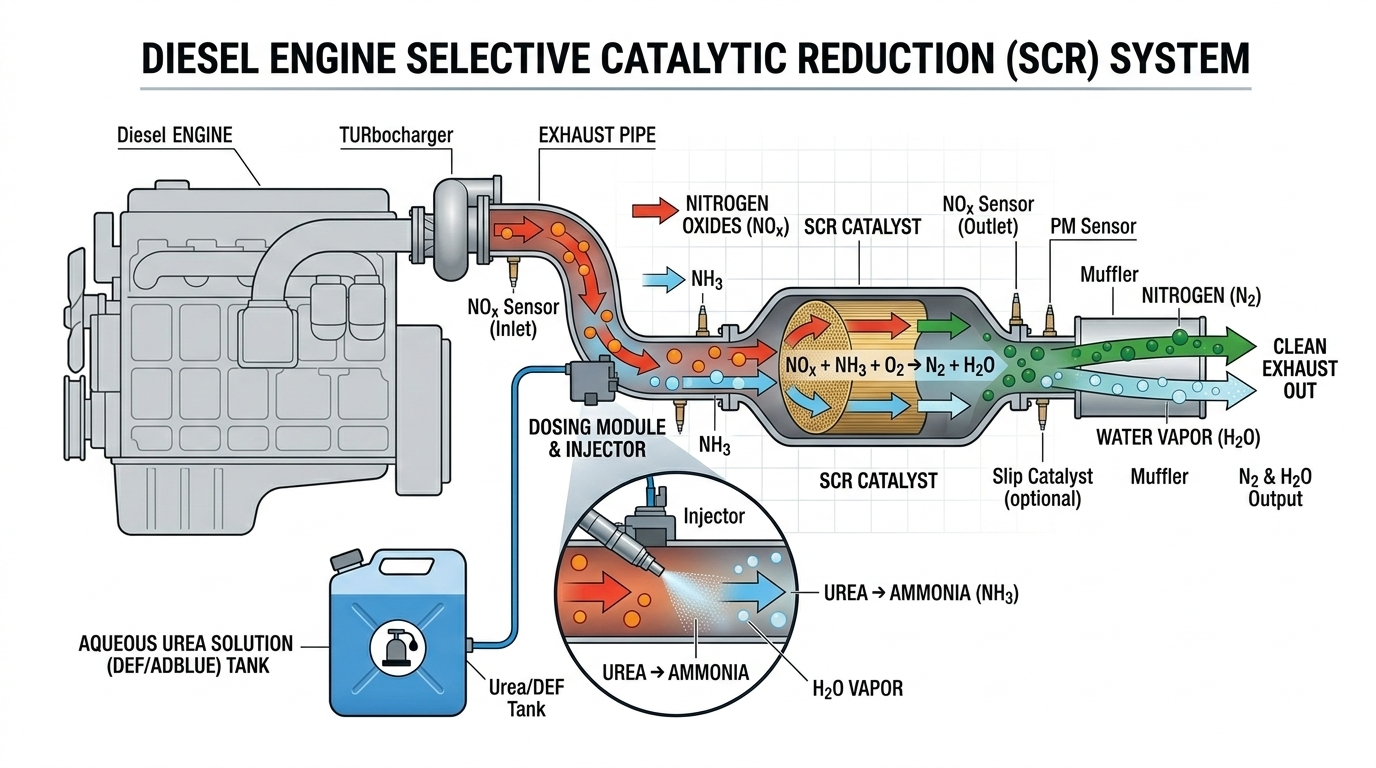
Aqueous urea solution is a clear, non-toxic liquid made by dissolving urea in deionized water. Its primary use in diesel engines is as a selective catalytic reduction (SCR) agent, which significantly reduces nitrogen oxide (NOx) emissions. NOx emissions are harmful gases produced during combustion in diesel engines, contributing to air pollution and smog.
In Malaysia and other countries with emission regulations, diesel vehicles rely on aqueous urea solution to meet environmental standards while maintaining engine performance. AdBlue is simply the commercial grade of aqueous urea solution designed for use in vehicles and industrial machinery.
How Aqueous Urea Solution Works in Diesel Engines
When injected into the exhaust stream of a diesel engine, aqueous urea solution undergoes a chemical reaction within the SCR system. The urea decomposes into ammonia (NH3), which reacts with nitrogen oxides (NOx) in the exhaust. This process converts harmful NOx gases into harmless nitrogen (N2) and water (H2O).
The reaction can be summarized as:
4NO + 4NH3 + O2 → 4N2 + 6H2O
2NO2 + 4NH3 + O2 → 3N2 + 6H2O
This reaction effectively reduces emissions, helping diesel engines comply with Euro 4 and Euro 5 standards, which are commonly adopted in Malaysia.
AdBlue vs DEF vs AUS 32 — Are They the Same?
One of the most common sources of confusion is the variety of names used for the same product. The short answer: yes, AdBlue, Diesel Exhaust Fluid (DEF), and Aqueous Urea Solution (AUS 32) are all the same product — a 32.5% urea solution meeting ISO 22241 standards.
| AdBlue® | Registered trademark of the VDA (German Association of the Automotive Industry); widely used in Europe, Asia, and Malaysia |
| Diesel Exhaust Fluid (DEF) | Term primarily used in North America and among technical/industrial audiences |
| Aqueous Urea Solution (AUS 32) | The ISO technical designation used in standards, engineering documents, and specifications |
Any product sold as AdBlue, DEF, or AUS 32 must conform to ISO 22241 to legally carry these names. This means the 32.5% urea concentration and purity thresholds are mandatory regardless of the brand or trade name.
Applications of Aqueous Urea Solution
Aqueous urea solution has become essential for multiple industries and vehicle types. Its applications include:
1. Diesel Vehicles
Trucks, buses, and commercial fleets in Malaysia use AdBlue to reduce NOx emissions.
It is essential for vehicles equipped with SCR systems to comply with emission standards.
2. Industrial Machinery
Generators, construction machinery, and agricultural equipment benefit from aqueous urea solution for emission control.
Helps extend equipment life by reducing exhaust-related corrosion and deposits.
3. Marine Applications
Ships and boats with diesel engines use aqueous urea solution in SCR systems to reduce NOx emissions and meet marine environmental regulations.
4. Power Plants and Stationary Engines
Large diesel-powered engines in power generation can use aqueous urea solution to reduce environmental impact.
Benefits of Aqueous Urea Solution
Using aqueous urea solution in diesel engines provides a range of benefits, including:
- Environmental Compliance: Reduces NOx emissions by up to 90%, helping vehicles and machinery comply with local and international emission standards.
- Engine Efficiency: SCR systems using aqueous urea solution allow diesel engines to run at higher efficiency without compromising fuel consumption.
- Cost-Effective Solution: Compared to other emission-reducing technologies, aqueous urea solution is affordable and easy to integrate into existing diesel engines.
- Safety and Handling: Non-toxic, non-flammable, and biodegradable, aqueous urea solution is safe to handle with proper storage and usage.
- Extended Engine Life: Reduces the formation of harmful nitrogen oxide deposits in the exhaust system, lowering maintenance needs and improving longevity.
Storing and Handling Aqueous Urea Solution
Proper storage and handling of aqueous urea solution are critical to maintaining its quality and effectiveness:
- Storage Temperature: Keep between -11°C to 30°C to prevent crystallization.
- Containers: Use clean, sealed, and corrosion-resistant containers.
- Avoid Contamination: Do not mix with diesel, oils, or other chemicals. Contaminants can damage SCR systems.
- Shelf Life: Typically 12 months if stored correctly.
By following these precautions, businesses and vehicle operators can maximize the efficiency of aqueous urea solution and SCR systems.
Why Choose Our Aqueous Urea Solution
At HS Diesel Malaysia, we supply high-quality AdBlue, ensuring your vehicles and machinery operate efficiently while meeting emission standards. Our aqueous urea solution is:
- ISO 22241-certified for quality and purity
- Safe, non-toxic, and environmentally friendly
- Available for bulk or retail purchase across Malaysia
You can explore our Adblue to ensure your fleet or machinery meets the latest emission requirements.
Conclusion
Aqueous urea solution is no longer just an optional additive, it is an essential component for modern diesel engines. By reducing harmful NOx emissions, improving engine efficiency, and extending the life of exhaust systems, AdBlue has become a cornerstone of emission control technology in Malaysia and worldwide.
Whether for trucks, buses, industrial machinery, or marine engines, investing in high-quality aqueous urea solution (AdBlue) is a smart choice for both performance and the environment.
Frequently Asked Questions (FAQs)
What is aqueous urea solution used for?
Aqueous urea solution is primarily used in diesel engine selective catalytic reduction (SCR) systems to reduce nitrogen oxide (NOx) emissions. It converts harmful exhaust gases into harmless nitrogen and water, helping vehicles and machinery meet environmental regulations.
Is AdBlue the same as aqueous urea solution?
Yes. AdBlue is a commercial-grade aqueous urea solution specifically designed for SCR systems in diesel engines. It is made from high-purity urea mixed with deionized water and must meet ISO 22241 quality standards.
How does aqueous urea solution reduce diesel emissions?
When injected into the exhaust stream, aqueous urea solution breaks down into ammonia. The ammonia reacts with nitrogen oxide gases in the SCR catalyst, converting them into nitrogen and water vapor, significantly reducing harmful emissions.
How often does aqueous urea solution need to be refilled?
Consumption varies depending on engine size and driving conditions. On average, diesel vehicles use about 2–5% of the diesel fuel consumption in AdBlue.
How should aqueous urea solution be stored?
Aqueous urea solution should be stored in sealed containers, away from direct sunlight, and between -11°C and 30°C to maintain quality and prevent crystallization.
Disclamer:
We hope you found this article informative. The content provided is for general informational purposes only and does not constitute professional advice or necessarily reflect the full scope of services offered by Hong Seng Diesel Sdn. Bhd.
Readers are encouraged to consult with a qualified industry professional or contact our team for solutions tailored to their specific operational or business needs. While we strive to ensure accuracy and completeness in our articles, we cannot guarantee they are entirely error-free. Hong Seng Diesel Sdn. Bhd. assumes no responsibility for any errors or omissions.